Perimenopause Heart Palpitations: Scary, But Usually Not What You Think
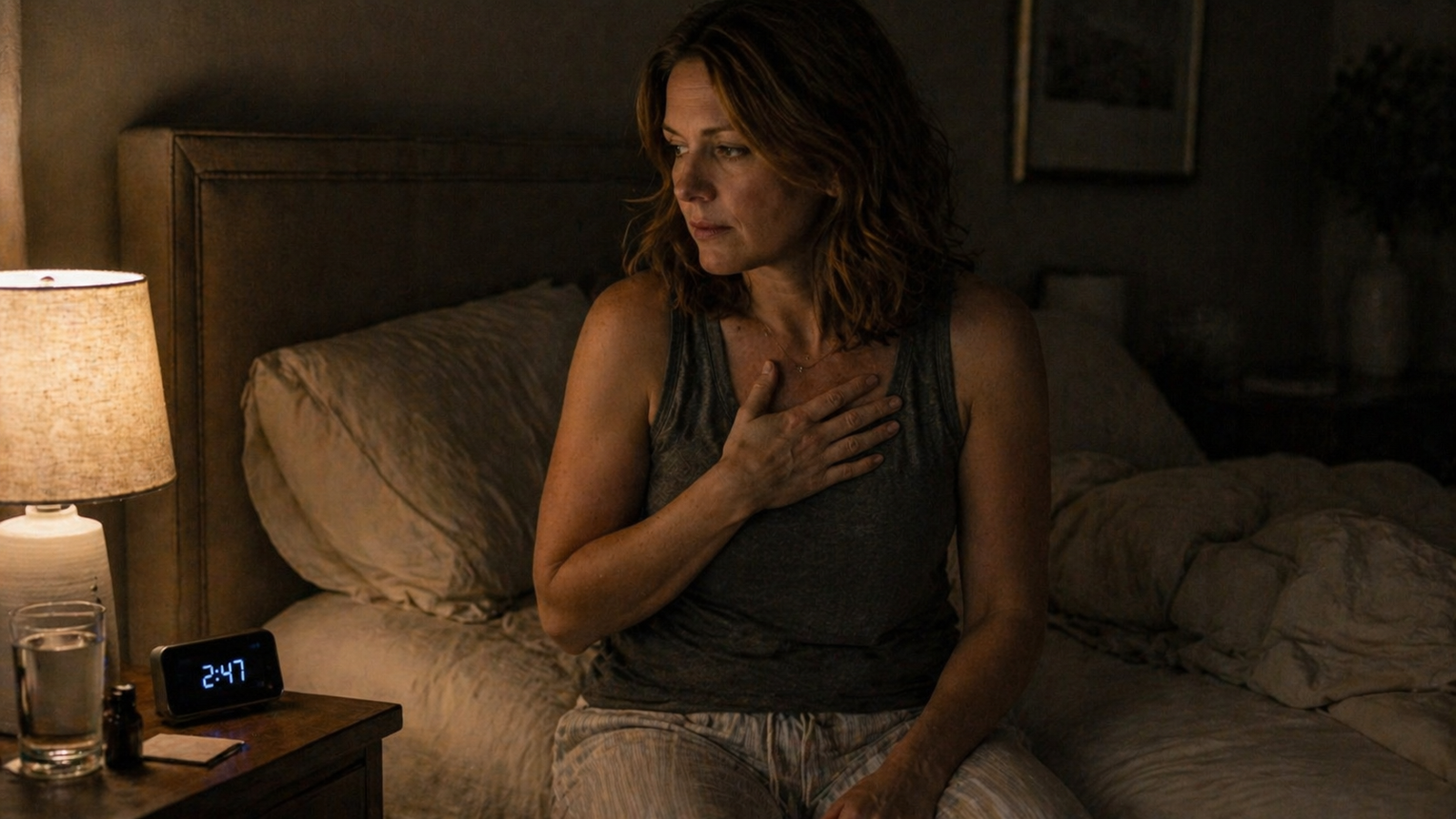
The first time I felt it, I was charting after a long shift. A flutter in my chest. Then a thump. Then nothing for a second, and then a double-beat that made me sit up straight.
As a nurse, my brain immediately went to the worst-case list. Arrhythmia. SVT. Something that ends with “you should have seen a cardiologist sooner.” I sat there doing what no healthcare worker should ever do, which is Google their own symptoms at 11pm after a 12-hour shift.
I was 43. I was perimenopausal. And I had no idea the two things were connected.
What’s Actually Happening
Heart palpitations are incredibly common in perimenopause. Somewhere between 25 and 40 percent of women in the menopause transition report them. Which is a lot of people lying in bed wondering if they’re dying.
Here’s why it happens: estrogen has direct effects on the heart and cardiovascular system. It helps regulate the electrical signals that keep your heart beating in a steady rhythm. When estrogen starts fluctuating wildly (as it does in perimenopause), those electrical signals can get a little glitchy.
The palpitations you feel are usually benign ectopic beats. Your heart throws in an extra beat, or skips one, or does a little flutter that feels like a fish flopping around in your chest. Alarming. Usually harmless.
They often show up alongside hot flashes too. The same estrogen fluctuation that triggers a hot flash can trigger palpitations at the same time. If you notice they cluster together, that’s actually useful information. It points strongly toward a hormonal cause rather than a cardiac one.
When to Get It Checked
I’m a nurse and I still got an EKG when these started. I want to say that clearly: if you haven’t had cardiac symptoms evaluated, go get evaluated. Not because I think something is wrong with you, but because ruling out a cardiac cause is worth the peace of mind and takes about ten minutes.
Get checked if any of these apply:
- The palpitations come with chest pain, shortness of breath, or dizziness
- They happen during exercise
- They feel like a fast, sustained racing rather than an occasional flutter or thump
- You have a personal or family history of heart disease
- They’re getting worse or more frequent over time
If your EKG is normal and your doctor isn’t concerned, you’re almost certainly in the “perimenopause does weird things to your heart rhythm” category. Welcome to the club. We have magnesium.
What Actually Helps
Magnesium
I know I recommend magnesium for what feels like everything on this site. That’s because estrogen depletion affects about seventeen different systems simultaneously, and magnesium is involved in most of them. Heart palpitations included.
Magnesium plays a key role in cardiac muscle function and electrical conduction. Low magnesium is a known trigger for arrhythmias, including the benign ectopic beats that feel like palpitations. And a lot of perimenopausal women are low without knowing it.
If you’re not already taking magnesium glycinate for sleep (I wrote about that here), palpitations are another strong reason to start. The glycinate form absorbs better and is gentler on the stomach than magnesium oxide, which is what most drugstore versions contain.
Doctor’s Best Magnesium Glycinate is the one I take. Inexpensive, well-absorbed, and the version I’ve recommended to patients for years.
CoQ10
CoQ10 is an antioxidant your cells use to produce energy, and it’s particularly concentrated in the heart. Levels naturally decline as we age, and some research suggests estrogen plays a role in CoQ10 metabolism, meaning perimenopause may accelerate that decline.
The evidence isn’t as strong as it is for magnesium, but CoQ10 has a solid safety profile and real research behind it for cardiovascular support. I’ve been taking 100mg daily for about two years now. The ubiquinol form is better absorbed than ubiquinone, especially if you’re over 40.
Electrolyte balance
Low potassium and low sodium can both trigger palpitations. If you’re eating a restricted diet, sweating more than usual (hot flashes will do that), or drinking a lot of caffeine, your electrolytes might be off. Some women find that adding an electrolyte supplement or being more intentional about sodium intake makes a real difference.
Caffeine and alcohol
Both are palpitation triggers for a lot of women in perimenopause. I know. I know. But if you’re having regular palpitations, it’s worth cutting back on both for a couple of weeks to see if it makes a difference. Caffeine in particular can exacerbate ectopic beats. I cut my coffee from two cups to one and moved it earlier in the morning. That alone helped noticeably.
Stress and sleep
Cortisol also affects heart rhythm. Poor sleep and chronic stress (hi, welcome to perimenopause) can make palpitations worse. Addressing sleep, which I go into detail on here, often helps palpitations too. Everything in this transition is connected in ways that are genuinely annoying.
What I Actually Do
For what it’s worth: I take magnesium glycinate every night before bed. I take CoQ10 in the morning with food. I’ve cut back on alcohol significantly. My palpitations are much less frequent than they were two years ago.
I can’t tell you which of those things made the biggest difference. Probably the magnesium. Maybe the combination. Bodies are complicated.
The main thing I’d want you to take away is this: if you’re in perimenopause and you’re getting heart palpitations, you’re not imagining things and you’re probably not in cardiac danger. Get it checked once to be sure. Then address the hormonal piece.
It took me longer than it should have to connect these dots. I was treating cardiac and hormonal symptoms as separate problems when they were almost certainly the same problem wearing two different hats. That’s what perimenopause does. It shows up in your chest, your brain, your sleep, your mood, and your waistline all at once and leaves you feeling like a completely different person.
You’re not. You’re the same person, dealing with a real physiological transition that medicine has historically underserved. Knowing what’s causing it doesn’t fix it immediately, but it’s a start.