Magnesium for Perimenopause: Why I Take It Every Night (And What Took Me So Long)
Magnesium is one of the most well-supported supplements for perimenopause symptoms. It supports sleep, reduces anxiety, eases muscle tension, and may help with mood, all things that go sideways when estrogen starts fluctuating. The form matters: magnesium glycinate is the best option for most people because it absorbs well and is gentler on your digestive system than cheaper forms like magnesium oxide. A typical starting dose is 200 to 400mg taken 30 to 60 minutes before bed.
I have a running list of things I wish someone had told me at 41.
“Your estrogen is dropping and it’s going to affect literally everything” would’ve been nice. “The anxiety you’re feeling out of nowhere isn’t a personality flaw, it’s hormonal” would’ve helped too. But right near the top of that list is something embarrassingly simple: take magnesium glycinate at night.
I’m a registered nurse. I spent years talking to patients about their meds, their labs, their supplements. And I still stumbled around for almost a year before I connected the dots on magnesium. A year of terrible sleep, calf cramps waking me up at 3am, and a generalized feeling of low-grade wrongness that I kept chalking up to stress.
I’m telling you this not because it’s a good story, but because if I missed it, you probably did too.
Your body is almost certainly already running low
Magnesium is involved in over 300 processes in your body: sleep regulation, nerve signaling, muscle function, cortisol control, serotonin production. It’s not optional. And a significant chunk of American adults are already deficient before perimenopause enters the picture.
Depleted soil means less magnesium in food than there used to be. Stress burns through it faster. Alcohol depletes it. (Hi.) And then estrogen drops, which affects how efficiently your body absorbs and uses what little you’re getting.
The symptoms of magnesium deficiency overlap almost perfectly with perimenopause symptoms: worse sleep, more anxiety, muscle cramps, headaches, heart palpitations. Which is exactly why it’s so easy to miss. You assume it’s all just The Hormones Doing Their Thing and white-knuckle through it.
Some of it is. But some of it might just be a mineral you can buy for $20.
What it actually felt like
By 42 I was sleeping maybe four hours at a stretch. Not because of hot flashes. I’d wake up just awake, heart going a little faster than it should, brain immediately cataloguing every awkward thing I’d said or done since approximately 1998. Then I’d lie there doing that until my alarm went off.
The calf cramps were a few nights a week. The headaches were more frequent than they used to be. And I had this constant low-level hum of anxiety that I kept trying to meditate or exercise away, with mixed results.
When I finally went looking for research (occupational hazard, and also desperation), I found a 2017 study in Magnesium Research showing supplementation improved sleep quality. Multiple papers on magnesium and cortisol dysregulation. A solid body of evidence on headaches. None of this was mechanistically surprising. I just hadn’t put it together.
What surprised me was how fast it worked once I did.
The form matters more than the brand
“Magnesium” isn’t one thing. There are at least eight common forms, and they behave completely differently in your body. This is where most people go wrong.
Magnesium glycinate is what I take. It’s magnesium bound to glycine, an amino acid with its own mild calming effect. Absorption is high, around 80%. It crosses the blood-brain barrier well. And unlike cheaper forms, it won’t send you to the bathroom at 2am. That last part matters a lot when the whole point is better sleep.
Magnesium oxide is what’s in most bargain supplements and a depressing number of “sleep blend” products. Absorption: roughly 4%. It passes through your gut mostly intact, which is why it’s also sold as a laxative. Don’t bother.
Magnesium citrate is decent. Better absorption than oxide, widely available, costs less than glycinate. It can cause digestive issues at higher doses, but at 200 to 300mg most people are fine. A reasonable backup if glycinate isn’t in your budget.
What Jen uses
Natural Vitality Natural Calm (Raspberry Lemon)
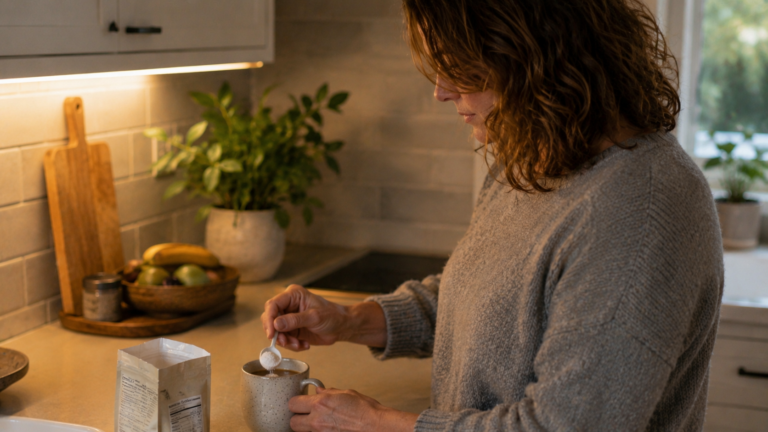
The powder form — mix in warm water before bed. Not as bioavailable as glycinate, but many people love the ritual of it. Good option if you hate swallowing capsules.
Check price on Amazon →Magnesium malate is worth mentioning if fatigue and muscle pain are your main complaints. Some evidence it helps with cellular energy production. I haven’t used it as consistently as glycinate, but it has its fans.
Start with glycinate. That’s the answer.
How I actually take it
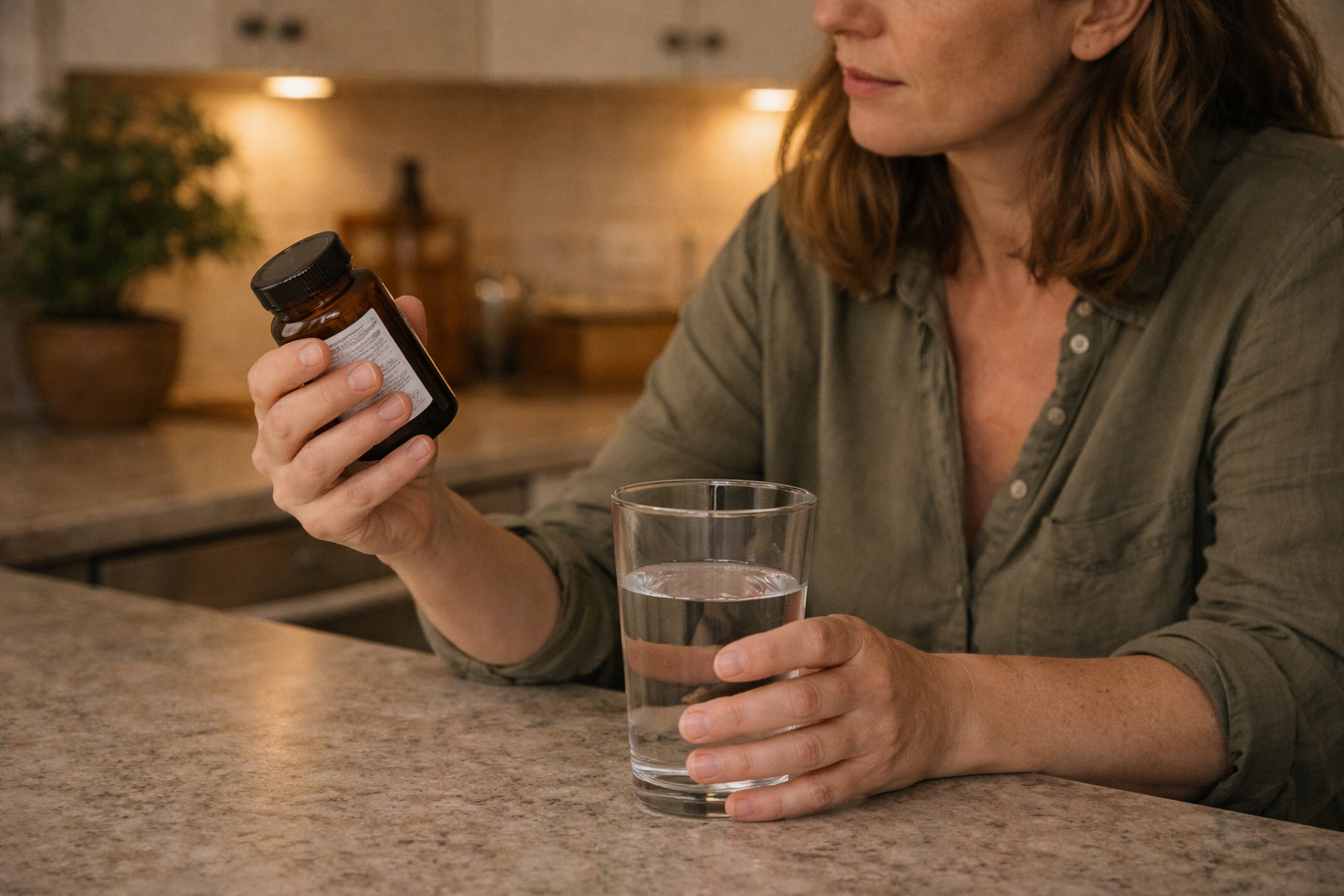
I take 300mg while I’m doing the whole bedtime routine with the kids. By the time the last “one more glass of water” request has been filed and rejected and I finally sit down, it’s had about 45 minutes to start working. Timing it to something I’m already doing every night means I actually remember it.
I didn’t feel a dramatic difference on night one. Or night two. By the end of the first week I was sleeping until 5am more nights than not, which sounds modest but felt genuinely miraculous after months of waking up at 2. The calf cramps stopped within about ten days. The headaches got less frequent over the first month.
The anxiety didn’t disappear. I want to be clear about that. Magnesium isn’t a drug. If your anxiety is significant, talk to your doctor, not a blog. But the constant background hum of it came down enough to notice. Like someone turned the volume down from a 6 to a 4.
What I’m honest about
The sleep evidence is solid. Multiple randomized controlled trials, real effect sizes. The anxiety evidence is promising but thinner. A lot of the better studies are specifically in people with confirmed deficiency, and standard serum magnesium tests are a blunt instrument that misses a lot of intracellular depletion.
What I can tell you with confidence: deficiency is common, the symptoms overlap with perimenopause almost exactly, supplementation at normal doses is very low risk, and the cost of trying it for a month is basically nothing.
That’s a favorable risk-benefit ratio. I’m a nurse. That’s how I think about things.
What I actually use
I’ve tried several brands. These are the three I’d actually recommend:
Pure Encapsulations Magnesium Glycinate — clean label, no fillers, the brand a lot of functional medicine doctors use for their own patients. Not cheap, but consistent.
Thorne Magnesium Bisglycinate — very similar quality tier to Pure Encapsulations. Thorne’s manufacturing standards are among the best in the industry. Either of these two if you don’t want to think about it.
What Jen uses
Doctor’s Best Magnesium Glycinate
The form that actually absorbs. 300-400mg before bed — noticeably better sleep, less muscle tension, and no GI issues. This is the one I’ve stuck with.
Check price on Amazon →Doctor’s Best High Absorption Magnesium — this is the one I’d point you to if you don’t want to spend $30+ a bottle. Glycinate chelate, works just as well in my experience, widely available.
(Disclosure: some links here are affiliate links. I make a small commission if you buy through them, at no extra cost to you. I only recommend things I’d actually suggest to a patient or friend.)
One thing to check first
If you’re on antibiotics, osteoporosis meds, diabetes meds, or anything for your heart, check with your doctor or pharmacist before adding magnesium. Not because it’s dangerous, but because it can affect absorption and timing of other medications. Standard supplement caveat, but worth saying.