Why You Can’t Sleep Anymore (And What to Actually Do About It)
Perimenopause disrupts sleep through several overlapping mechanisms: night sweats and hot flashes that fragment deep sleep, rising cortisol that causes early-morning waking, and declining progesterone (which has sedative properties) that makes it harder to fall and stay asleep. The result is often lighter, shorter, less restorative sleep even on nights without obvious waking. Magnesium glycinate, consistent sleep and wake times, and reducing alcohol in the evening are among the most evidence-supported interventions.
What Jen uses
Doctor’s Best Magnesium Glycinate
The form that actually absorbs. 300-400mg before bed — noticeably better sleep, less muscle tension, and no GI issues. This is the one I’ve stuck with.
Check price on Amazon →I used to be a good sleeper.
I mean this sincerely. I could fall asleep within minutes, sleep eight hours, wake up feeling human. It was one of my quiet superpowers. My husband would ask how I did it. I had no idea. I just did.
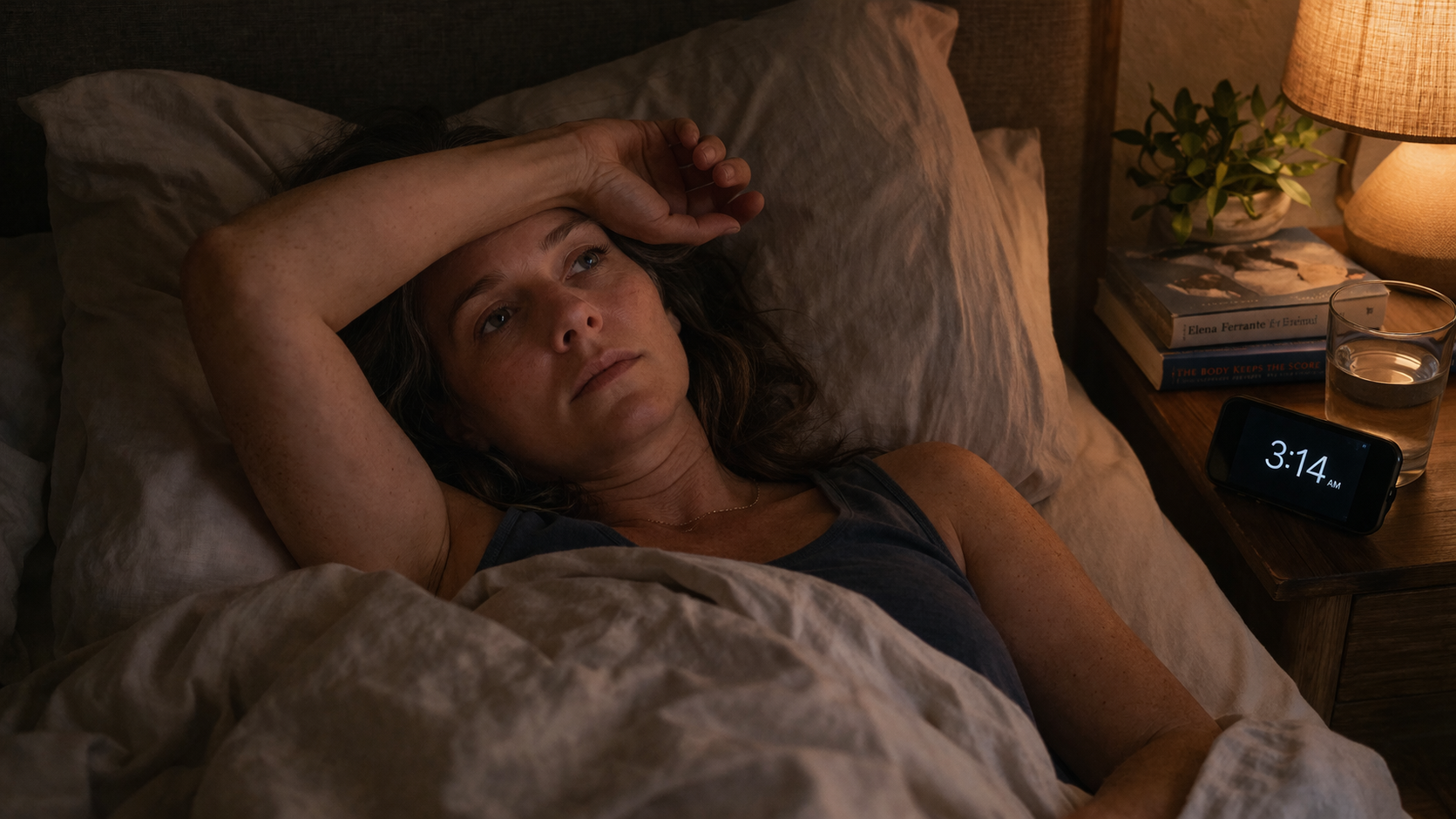
Then I turned 41, and it stopped. Not all at once. Gradually, and then suddenly, the way these things go. First it was occasional 3am wake-ups. Then the wake-ups got more frequent. Then the getting back to sleep part started taking longer. Then some nights I’d just lie there from 2am on, doing the mental math on how many hours I’d get if I fell asleep right now, which is of course the exact thing that makes falling back asleep impossible.
By the time I figured out what was happening, I had probably averaged six hours a night for the better part of a year. I was running on caffeine and stubbornness, which works until it very much doesn’t.
Why perimenopause wrecks sleep (it’s not just hot flashes)
Hot flashes get all the press, but they’re actually only part of the story. Plenty of women have terrible perimenopause sleep without any significant hot flashes. I was one of them for a long time.
The fuller picture involves at least three separate things happening at once.
Progesterone decline. Progesterone is a natural sedative. It’s calming, it supports GABA (your brain’s main inhibitory neurotransmitter), and it promotes the kind of deep slow-wave sleep that actually restores you. Progesterone starts dropping earlier in perimenopause than estrogen does. So long before your periods get irregular, your sleep architecture can already be shifting.
Cortisol dysregulation. In a healthy sleep cycle, cortisol is at its lowest around midnight and rises gradually to help you wake up in the morning. In perimenopause, that curve often shifts forward. Cortisol starts rising earlier, which is why 3am or 4am waking is so common. You’re not waking up anxious because you’re anxious. You’re waking up because your stress hormone is doing its morning ramp-up at the wrong time.
Estrogen fluctuations and thermoregulation. Estrogen helps your body regulate temperature. When it fluctuates, your hypothalamus (your internal thermostat) gets unreliable signals. The result is night sweats and hot flashes, but also just general temperature dysregulation that disrupts sleep even without a full sweat-through event.
All three of these can be happening simultaneously. Which is why perimenopause sleep problems are harder to fix than regular insomnia, and why the usual advice (“practice good sleep hygiene!”) feels completely inadequate when you’re lying there at 3:30am for the fifth morning in a row.
What I tried and what actually worked
I want to be upfront: I tried a lot of things. Some of them helped. Some of them were a waste of money. Here’s my honest breakdown.
Magnesium glycinate: genuinely helpful. This was the first thing that made a noticeable difference. 300mg about 45 minutes before bed. I go into much more detail in my magnesium post, but the short version is: it improved my sleep quality within the first week and kept the calf cramps that were also waking me up from happening at all. If you do nothing else on this list, do this.
A firm wake time: counterintuitively helpful. When you’re not sleeping well, the instinct is to sleep in whenever you can, grab naps, protect every possible sleeping minute. This makes it worse. Your circadian rhythm runs on your wake time more than your bedtime. Waking up at the same time every day, including weekends, anchors your rhythm and makes it easier to fall asleep at night. I hated this advice before I tried it. It worked.
Cutting the evening wine: harder than it should be, but it helped. Alcohol makes you feel like it’s helping you sleep because it helps you fall asleep. But it fragments your sleep in the second half of the night, suppresses REM, and raises your core temperature. All bad. I didn’t quit drinking. I moved it earlier and cut to one drink on nights I wanted to sleep well. The difference was noticeable within a few days.
Cooling the room: more helpful than I expected. Your body needs to drop its core temperature to initiate sleep. Keeping the room cooler (somewhere around 65 to 68 degrees) supports that process and helps with the thermoregulation issues that come with estrogen fluctuation. We got a small fan directed at the bed. Unglamorous but effective.
Melatonin: meh, with caveats. I tried it. It’s useful for shifting your sleep timing (jet lag, shift work) but it’s not particularly effective for the kind of wake-after-sleep-onset problems perimenopause causes. If you’re having trouble falling asleep, low-dose melatonin (0.5mg to 1mg, not the 10mg megadose that most gummies contain) is worth trying. For staying asleep, it’s not your tool.
What Jen uses
Life Extension Melatonin 300mcg
Low-dose melatonin done right. 300mcg, not the 10mg mega-dose most stores sell. Smaller doses work better for most adults and don’t cause the morning grogginess.
Check price on Amazon →Cognitive behavioral therapy for insomnia (CBT-I): actually the most evidence-based option. I’ll be honest, I resisted this because it sounded like someone was going to tell me to meditate more. It’s not that. CBT-I is a structured program that addresses the thoughts and behaviors that perpetuate insomnia. It has stronger evidence than sleeping pills for chronic insomnia. The Sleepio app is a decent self-guided version if you don’t want to find a therapist.
What about sleep supplements?
There are a lot of products in this space. Most of them are relying on magnesium (good), melatonin (meh), or L-theanine (reasonable). A few things worth knowing:
What Jen uses
NOW Foods L-Theanine 200mg
Pairs well with magnesium at bedtime. The calm-without-drowsy effect is real. I also use it during high-stress shifts at work when I need to stay sharp but not wired.
Check price on Amazon →L-theanine is an amino acid found in green tea. It promotes relaxation without sedation and has decent evidence for improving sleep quality and reducing time to fall asleep. 100 to 200mg in the evening. It stacks well with magnesium.
Ashwagandha is an adaptogen with some evidence for reducing cortisol and improving sleep quality, particularly in people with high stress. It’s not a sedative. More of a cortisol regulator. If the cortisol dysregulation piece is your main issue (you’re waking early and feeling wired), it’s worth considering. I’ve used it on and off.
Valerian root has a long history of use as a sleep aid. The evidence is genuinely mixed. Some studies show benefit, some don’t. It’s low-risk, so if you want to try it, try it. I personally didn’t find it helpful, but I hear from enough people who do that I won’t dismiss it.
When to actually talk to your doctor
If you’ve been sleeping badly for more than a few months and it’s affecting your functioning, that’s worth a real conversation with your doctor. Not a “mention it and get ignored” conversation. An actual one.
Hormone therapy, specifically low-dose progesterone, can be remarkably effective for perimenopause sleep problems. Progesterone has direct sedative properties and addresses one of the root causes rather than just the symptoms. It’s not right for everyone, but if supplements and lifestyle changes haven’t moved the needle, ask about it.
Some doctors also prescribe low-dose antidepressants (particularly trazodone or low-dose doxepin) specifically for insomnia in this population. Not my first recommendation, but it’s a real option when sleep deprivation is severe.
What I actually use now
My current sleep stack, for full transparency:
Doctor’s Best Magnesium Glycinate — 300mg about 45 minutes before I want to be asleep. Every night, no exceptions.
Jarrow Formulas L-Theanine — 200mg, same timing as the magnesium. The combination is noticeably better than either alone for me.
KSM-66 Ashwagandha — I take this in the morning, not at night. It works on cortisol over time, not as an acute sedative. KSM-66 is the most studied ashwagandha extract.
What Jen uses
Nutricost KSM-66 Ashwagandha
KSM-66 is the form with the most clinical research. I take it at night — it genuinely takes the edge off the 3am anxiety spiral without making me groggy the next day.
Check price on Amazon →I sleep through the night probably five out of seven nights now, which is an enormous improvement from where I was. The two nights I don’t are usually correlated with something obvious: a late night, alcohol, or a kid who was up sick. Real-life stuff, not hormonal chaos.
(Some links here are affiliate links. Small commission, no extra cost to you.)